
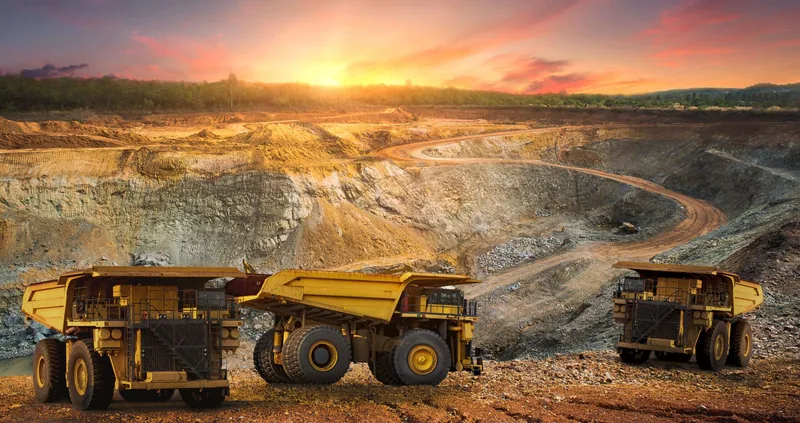
Uganda's mineral endowment is substantial and underexplored. The country holds significant deposits of gold, copper, cobalt, limestone, phosphates, iron ore, vermiculite, and rare earth elements, concentrated primarily in the west, south-west, and north-east. Alongside the established oil sector, Uganda's mining industry has attracted growing investor interest, particularly following the East African Community's drive to develop regional mining value chains.
For investors entering Uganda's mining sector, however, the legal framework is complex and the practical challenges are substantial. Understanding the regulatory structure, conducting proper due diligence, and structuring transactions correctly are essential before committing capital.
The Legal Framework for Mining in Uganda
The primary legislation governing mining in Uganda is the Mining Act 2003, which establishes the licensing regime, governs prospecting and mining operations, and sets out royalty and compensation obligations. Significant amendments were introduced through the Mining (Amendment) Act 2022, which tightened certain provisions around licence renewals, local participation requirements, and government equity stakes.
All minerals are vested in the Government of Uganda, regardless of who owns the surface land. The Directorate of Geological Survey and Mines (DGSM), operating under the Ministry of Energy and Mineral Development, is the primary regulatory authority for issuing licences and overseeing compliance.
Mining Licence Types
The Mining Act creates several categories of licence, each appropriate to a different stage or scale of operations:
| Licence Type | Purpose | Duration |
|---|---|---|
| Prospecting Licence | Preliminary investigation of an area for mineral potential | 2 years, renewable once |
| Exploration Licence | Systematic exploration and feasibility assessment | 3 years, renewable twice (max 9 years) |
| Mining Lease | Full commercial extraction and processing | 21 years, renewable |
| Location Licence | Small-scale artisanal and small mining | 1 year, renewable |
| Processing Licence | Processing and beneficiation of minerals | 5 years, renewable |
| Dealer's Licence | Purchase and sale of minerals | 1 year, renewable |
The most significant commercial investment typically proceeds through the Exploration Licence to Mining Lease pathway. A Mining Lease cannot be granted unless the applicant has completed exploration and demonstrated that a viable deposit exists.
Due Diligence in Mining Transactions
Mining transactions in Uganda frequently involve the acquisition of existing licence holders, joint venture entry into existing licences, or the purchase of data packages from prior exploration activities. In each case, comprehensive legal due diligence is essential and must cover:
Licence Status and History
Verify that the licence is valid, has not expired, and is not the subject of any cancellation notice, dispute, or pending application affecting its status. Licences that have been renewed incorrectly or allowed to lapse create title risk for any acquirer. Obtain confirmation directly from DGSM, not only from the seller's documentation.
Surface Rights
A mining licence authorises subsurface extraction but does not automatically confer rights to use the surface land. Where the surface is privately owned (freehold, Mailo, or leasehold), the licence holder must negotiate access and compensation arrangements with the surface owner. Failure to do so creates operational risk and potential criminal liability. In practice, the co-existence of mining activities and agricultural or residential use of the surface is one of the most common sources of dispute.
Environmental and Social Obligations
An Environmental Impact Assessment (EIA) approved by the National Environment Management Authority (NEMA) is a prerequisite for the grant of a Mining Lease and must be maintained throughout operations. Non-compliance with EIA conditions can result in suspension or cancellation of operations. Review the existing EIA for completeness and for any outstanding conditions that the seller has not fulfilled.
Joint Ventures and Licensing Transactions
Many mining investments in Uganda are structured as joint ventures between foreign investors and local partners. The 2022 amendments to the Mining Act introduced requirements for local content and, in certain categories, preferential rights for Ugandan citizens. Legal advice is essential to structure JV arrangements that comply with local participation requirements while protecting the investor's operational control, capital recovery rights, and exit mechanisms.
Key provisions to negotiate in any mining JV agreement include:
- Carried interest and cash call obligations
- Decision-making thresholds and deadlock provisions
- Pre-emption rights on transfer of interests
- Operator liability and indemnity arrangements
- Environmental remediation obligations on exit
- Dispute resolution (arbitration is strongly preferred in mining transactions)
Royalties and Fiscal Terms
Royalties are payable to the Government of Uganda on minerals extracted. Royalty rates vary by mineral type and are prescribed under the Mining Act and associated regulations. Gold, for example, attracts a royalty of 3% of gross value at the point of sale. Copper, cobalt, and other minerals have their own prescribed rates.
In addition to royalties, the fiscal regime applicable to mining operations includes corporate income tax (30%), withholding tax on dividends, and ring-fencing provisions that can limit the ability to offset exploration costs in one licence area against income from another. Tax structuring requires specialist advice at the transaction stage, not as an afterthought.
Government Participation
The Government of Uganda, through the Uganda Development Corporation (UDC) or other designated entities, may hold or seek a participating interest in significant mining projects. The terms of any government participation, including whether it is carried (meaning the government does not contribute to costs until production) or contributory, are negotiated and should be clearly reflected in the Mining Lease and any associated development agreement.
Investor alert: The 2022 amendments introduced provisions allowing the Government to acquire up to a 15% free-carried interest in large-scale mining projects. Understanding how this interacts with your JV structure and project financing is critical before finalising any transaction.
Cross-Border Mineral Trade
Uganda is a landlocked country, and mineral exports typically transit through Kenya (via Mombasa) or Tanzania (via Dar es Salaam). EAC trade protocols are relevant to cross-border mineral movements, but export controls under the Mining Act require that export permits are obtained before minerals leave Uganda. Unprocessed mineral exports may face restrictions or additional royalty obligations as Uganda pursues a beneficiation strategy to add value domestically before export.
Related Articles